
Let’s face it, sometimes you look at two jars on the shelf and wonder why one costs more when they’re both cannabis and both have a “big” THC number on the label.
That’s a fair question. “Craft” gets used as a selling point, and paying more doesn’t automatically mean you’re getting better weed. But when a producer is putting real care into the genetics, growing, harvesting and finishing, you can often see and smell the difference.
It starts before the plant is even growing!
A strain name can tell you something, but it doesn’t tell the whole story. Good growers don’t just pick a popular name and plant as much of it as possible. They look through different versions of a strain, called phenotypes, and choose the plant with the traits they want. The smell, flavour, appearance, how it grows and how it smokes. That process is called pheno hunting. It takes time, and most plants in a hunt won’t make the cut.
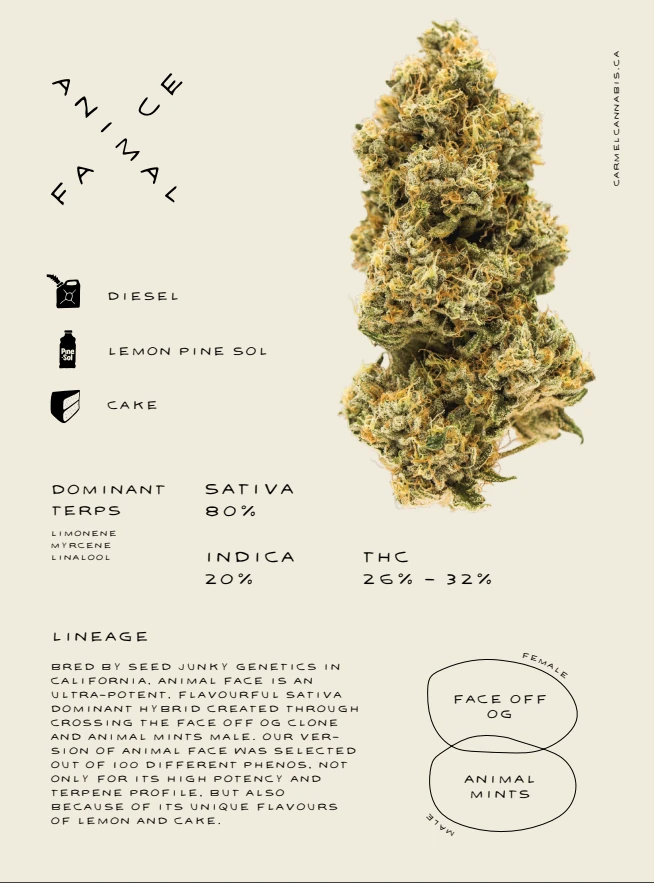
Carmel, for example, says its Animal Face came from a selection of 100 different phenotypes. Animal Face was bred by Seed Junky Genetics in California, but the
grower still had to find the particular version worth producing. Carmel was looking at things like potency and terpene profile, as well as the lemon-and-cake flavour it wanted.
That’s part of what makes the legacy breeders worth talking about. People like Seed Junky Genetics, Capulator and Thug Pug have spent years working with cannabis genetics and developing strains that growers still want to hunt through today. Capulator’s MAC, for example, has shown up in legal products in Ontario. Carmel has also explained that its MAC 1 comes from its own selection of seeds descended from the original MAC 1, not a claim that it’s selling Capulator’s exact original plant. That kind of detail matters. A familiar strain name is a starting point; the grower’s selection and execution are what bring a particular version to life. Carmel’s explanation of its MAC 1
Small batches can mean more attention to the details
The Ontario Cannabis Store has a specific craft designation for dried flower. To qualify, a grow facility must produce under 10,000 kilograms of dried flower per year, and the flower has to be hang-dried, hand-trimmed and hand-packaged. OCS craft criteria Those steps aren’t magic, and a craft label can’t promise you’ll love every bag. The point is that they take more hands-on work. Hang drying gives the flower time to dry in a controlled environment. Hand trimming gives someone the chance to work with the bud carefully, rather than running everything through the same machine. Hand packaging can also mean less rough handling before it gets to you. There’s research showing that trimming methods can affect the physical condition of cannabis trichomes. In one study, hand-trimmed samples showed intact trichome heads with little visible physical damage. That doesn’t prove every hand-trimmed product will be better, but it helps explain why some growers choose to take the slower route. Study on cannabis trichomes and trimming
The grow method matters, but there isn’t one winner
Indoor, greenhouse and outdoor cannabis are grown in different conditions. Indoor growing gives the producer a lot of control over light, temperature and humidity. Greenhouse growing uses sunlight while giving the grower some control over the environment. Outdoor growing depends more on the season and local conditions. All of those methods come with trade-offs. Indoor growing can mean more control, but it generally takes more energy. Greenhouse and outdoor grows can make greater use of sunlight, but the environment is less predictable. And “hybrid grow” usually means a mix of indoor-style controls and natural sunlight; it doesn’t mean the same thing as a hybrid cannabis strain. The growing method can affect the flower’s chemical profile. A study that compared genetically identical plants grown indoors and outdoors found differences in their cannabinoid and terpene profiles. It didn’t establish that one method is always better.
Study comparing indoor and outdoor cannabis
So, I wouldn’t say that craft automatically means indoor, or that indoor automatically means top shelf. What matters is whether the grower understands the method they’re using and gets the best out of that particular plant.
The work after harvest counts too
The plant doesn’t go straight from the grow room into a jar. It has to be dried, trimmed, cured, packaged and stored. How those steps are handled affects what you notice when you open it: the aroma, the texture, and whether the flower still feels fresh. A big THC number can catch your eye, but it doesn’t tell you everything about the experience or the quality of the flower. That’s not even mentioning the deceitful and dishonest THC testing practices employed by many large scale, corporate producers. It also won’t tell you whether the bud smells vibrant, whether it’s dried well, if its harsh or whether the grower picked a version of the strain they actually wanted to bring to market.
If you want to get a better sense of what you’re paying for, look for producers who explain their process. Do they name the breeder or share the lineage? Do they say how they selected the plant? Are they open about how they dry and finish their flower? Those details tell you more than a premium-looking label ever will.
What about the Health Canada cannabis study?
Health Canada published a report in February 2025 comparing 50 legal and 50 illegal dried cannabis samples from across Canada. It found much higher pesticide and microbial contamination in the illegal samples overall. It also found issues in some legal samples, including microbial results above the European Pharmacopoeia limits in 10 of the 50 legal samples. Read the Health Canada report
That deserves to be taken seriously. But the report doesn’t tell us whether those legal products were craft or large-scale, which brands were involved, or how they were grown. So it can’t prove that a particular kind of producer caused the outlying results.
What it does show is that the legal and illegal markets are not interchangeable, and that legal production still has room to improve. It also shows that “legal” and “craft” answer different questions. Legal status tells you the product is part of the regulated market. Craft describes a smaller-scale, hands-on
approach to producing the flower. Neither label should stop us from asking questions about quality.
So is craft worth paying extra for?
Sometimes, yes. You might get a more interesting strain, a better-selected phenotype, careful trimming, or flower that smells and feels the way you hoped it would. Sometimes you’ll try a craft product and decide it wasn’t worth the extra money. That happens too. For me, the point isn’t that every expensive jar is better, or that every large producer makes bad cannabis. It’s that the extra cost can reflect extra time and attention, from choosing the genetics to getting the finished flower into the package. If you can find out who bred it, how the grower selected it, and what care went into finishing it, you have a better reason to pay the premium. And if you open it and it doesn’t deliver, you have every right to decide it wasn’t worth it.